TMJ Massage · Ashmore, Gold Coast

Jaw
Release
Gold Coast

The muscles behind your pain — reached and released

The jaw is the most undertreated structure in the body. Clenching, grinding, clicking, headaches — all of it comes from muscles that can be worked directly. Jaw release massage at Soulful Sculpt gets to the root: releasing the masseter and pterygoids where no external technique can reach.
TMJ

Targeted joint
therapy

Deep

Intraoral &
external release

Pain
relief

Felt during
the session

Gold
Coast

Ashmore studio
QLD Australia


The problem

Your jaw is
holding
everything.

The temporomandibular joint (TMJ) connects the lower jaw to the skull on each side of the face. It's one of the most used joints in the body — speaking, eating, swallowing, and (for many people) clenching and grinding under stress. The muscles around it — the masseter, medial and lateral pterygoids, and temporalis — are among the strongest in the body relative to their size.

When these muscles are chronically overworked, they tighten, thicken, and become a source of persistent pain. Standard massage cannot reach the deepest layers. Jaw release massage — including buccal intraoral technique — works directly with these muscles at their root.

Masseter

The primary jaw muscle. In habitual grinders and clenchers, the masseter becomes visibly hypertrophied — enlarged from overuse. It drives most TMJ pain and can be released both externally and via buccal technique.

Pterygoids

Two muscles deep behind the cheekbone that control jaw movement and opening. Unreachable from outside the mouth. Tightness here causes restricted opening, jaw deviation, and clicking. Intraoral release is the only effective approach.

Temporalis

A fan-shaped muscle covering the temple. It closes the jaw and is a key driver of tension headaches originating from clenching. Releasing it directly often reduces headache frequency significantly.

The Nerve

The trigeminal nerve — the most branched in the face — runs through the jaw region. Chronic muscle tension creates nerve irritation that amplifies pain signals. Muscle release reduces the neurological contribution to TMJ pain.


Two outcomes

Less pain.
More movement.

Jaw release massage delivers two measurable outcomes — pain relief and improved jaw function. Most clients feel the change during the session itself: a reduction in the familiar tightness, more range in the jaw, less pressure behind the eyes.

Over a course of sessions, the change becomes structural — the muscles thin and soften, the chronic holding pattern releases, and the jaw begins to move the way it should have been moving all along.

I.

Pain Relief

Jaw pain, TMJ dysfunction, headaches from clenching, facial tension — all have the same root in the same muscles. Jaw release massage addresses that root directly.

Clients who have carried jaw pain for years often experience the first real relief of their lives in a single session. The pain returns less with each subsequent treatment as the muscle releases structurally.

TMJ · Jaw Pain · Headaches · Clenching

II.

Jaw Mobility

Restricted jaw opening, jaw deviation to one side, clicking or popping — these are signs of mechanical dysfunction in the muscles and joint. Releasing the pterygoids and masseter restores range of motion and reduces the clicking and locking that comes from asymmetrical muscle tension.

Many clients notice they can open their mouth more fully before they leave the studio.

Range · Clicking · Locking · Symmetry

Who it's for

The people
who live with it.

Most people with chronic jaw tension have been managing it — not addressing it. Mouth guards manage grinding at night but do nothing for the muscle. Pain relief manages symptoms but not cause. Jaw release massage addresses the cause.

You have diagnosed or suspected TMJ dysfunction — pain, clicking, restricted opening — and want structural treatment

You grind or clench your jaw (bruxism) and carry the resulting muscle soreness, headaches, and sensitivity daily

You get tension headaches at the temples, jaw, or behind the eyes — particularly after stress, long computer days, or on waking

You have restricted jaw opening or notice your jaw deviates to one side when you open wide

You've tried mouth guards, physiotherapy, or Botox for jaw clenching and want to address the underlying muscle tension directly

You notice your jawline has become squarer or heavier over time — a sign the masseter has hypertrophied from habitual clenching


Jaw release massage at Soulful Sculpt studio, Ashmore Gold Coast

Soulful Sculpt · Ashmore, Gold Coast

Your session

What to expect at Soulful Sculpt.

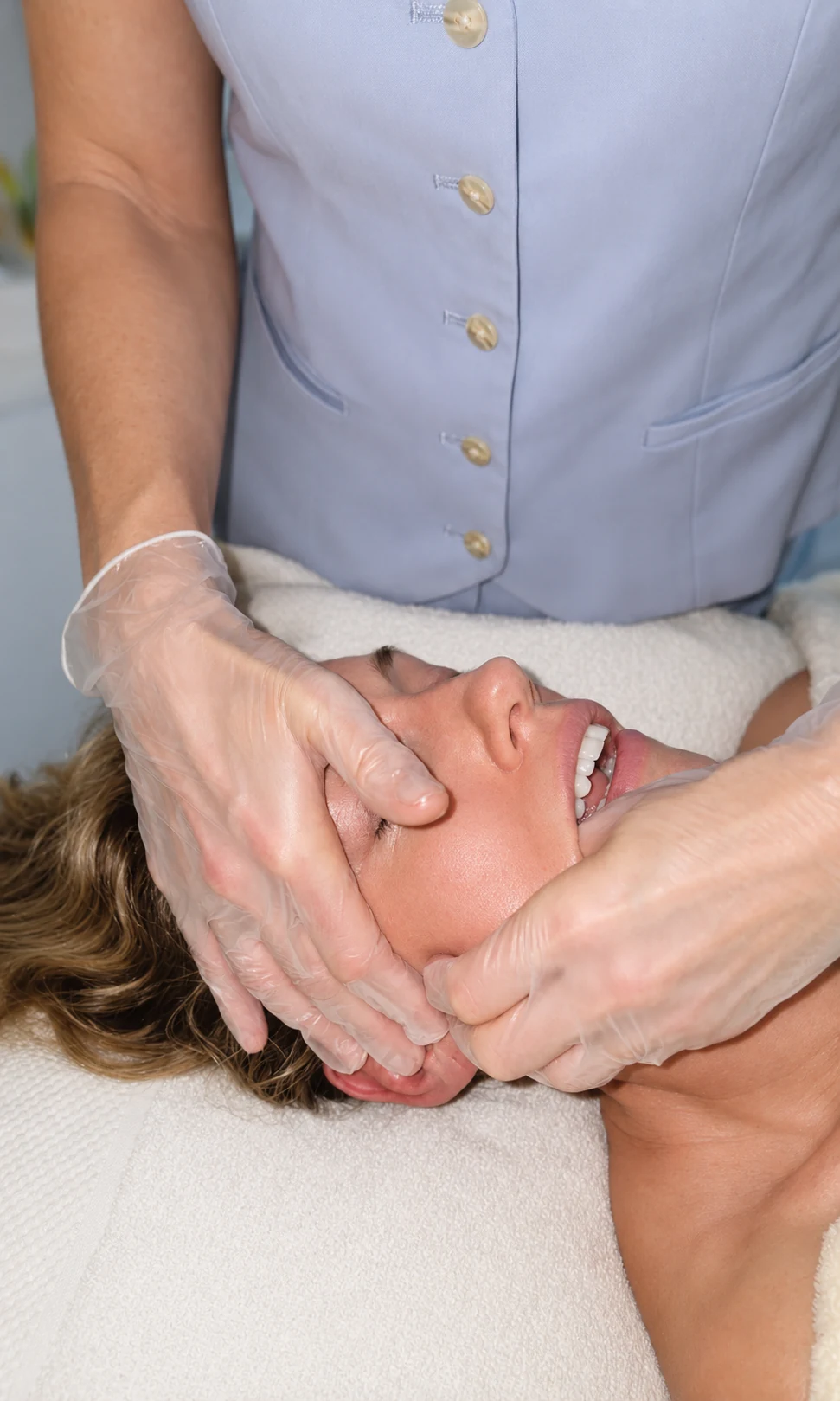
Sessions run 60 minutes at the Ashmore studio. The intraoral component uses sterile single-use gloves throughout. Tenielle works at a pace and pressure suited to each client — never forcing through guarding.

01

History & Assessment

Tenielle discusses your jaw history: how long you've had symptoms, whether you grind at night, where you feel pain, any previous treatments tried. Understanding the pattern matters as much as the technique.

02

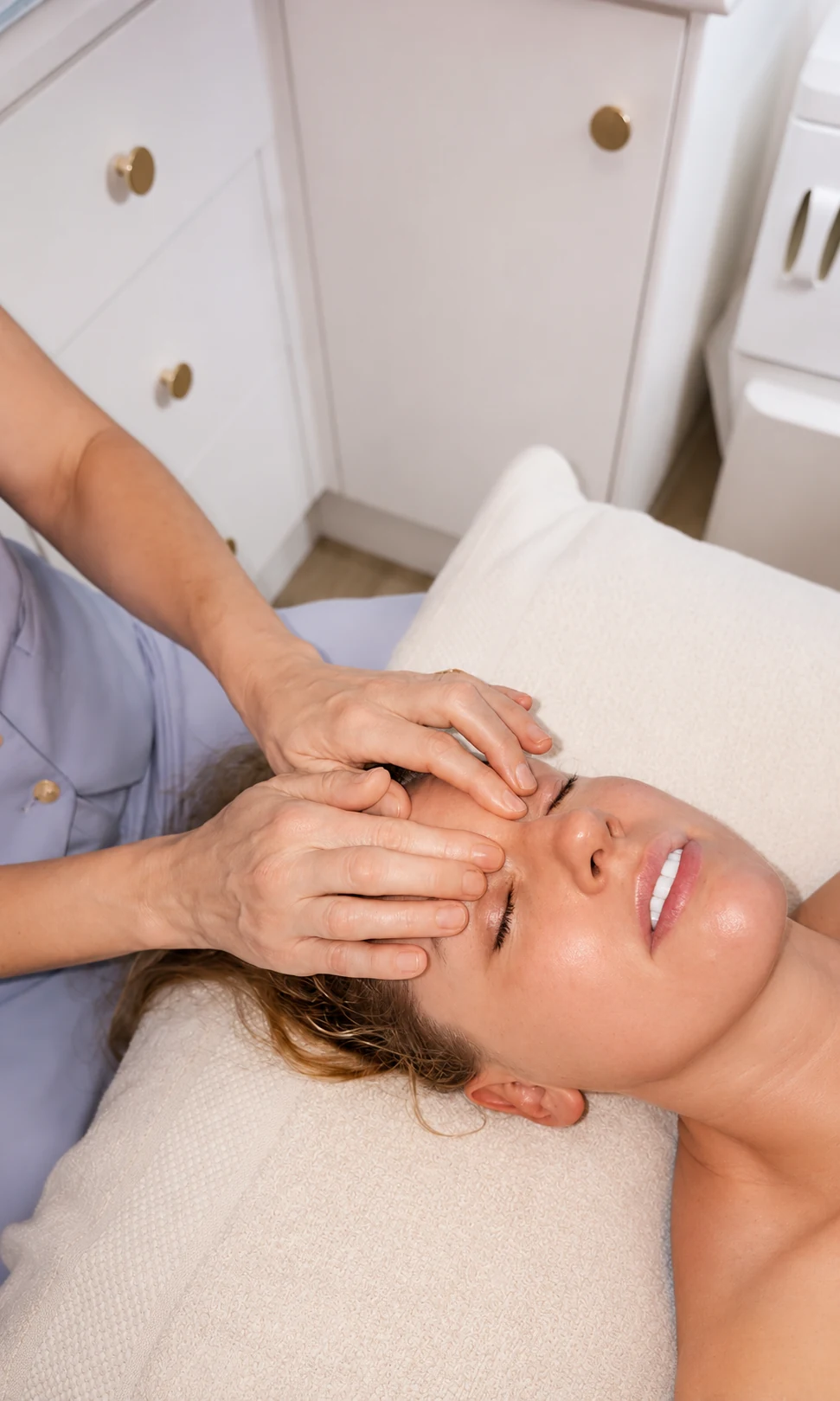
Scalp & Neck Release

Jaw tension rarely exists in isolation. The temporalis connects to the scalp, the masseter to the neck. Releasing these first establishes the context for the deeper work that follows.

03

External Jaw Release

Targeted external massage of the masseter, temporalis, and surrounding fascia. For many clients, this step alone produces immediate reduction in the familiar tightness. For others, it's preparation for the deeper intraoral work.

04

Buccal Intraoral Release

Using sterile gloves, Tenielle works from inside the mouth to release the masseter and pterygoids at their deepest layers — the part that no external technique can replicate. More on the buccal massage technique →

05

Reassessment & Integration

Tenielle reassesses jaw mobility and notes where tension persists. Remaining tightness is addressed with lighter integration work, and any asymmetries between the two sides are balanced.

06

Aftercare & Homecare Guidance

Mild jaw tenderness is normal for 24–48 hours after the first session — a sign the muscles have been genuinely worked. Tenielle will advise on jaw stretches, heat application, and a recommended treatment frequency for your specific presentation.


Your practitioner

Meet Tenielle.

Founder · Soulful Sculpt · Ashmore, Gold Coast

Tenielle is the founder of Soulful Sculpt. Her work with jaw tension began as an aesthetic observation — clients who released their jaw also changed how their face looked — and became a dedicated specialty when she understood how much chronic jaw pain her clients were carrying as a background condition of their lives.

Her approach is structural, not symptomatic. She doesn't massage over the pain — she works with the anatomy that creates it. Buccal technique, external jaw release, and an understanding of how the nervous system maintains chronic holding patterns combine into a treatment that many clients describe as unlike anything they've tried before.

Gold Coast's most-reviewed facial sculpting studio

Buccal, intraoral & myofascial specialist

Jaw tension, TMJ & bruxism focus

See: buccal massage Gold Coast

See: facial sculpting Gold Coast

Common questions

What you
need to know.

Jaw release massage is targeted manual therapy for the muscles of the jaw and face — specifically the masseter, pterygoids, and temporalis — that are the primary drivers of TMJ pain, jaw clicking, bruxism, and chronic headaches. At Soulful Sculpt, jaw release includes both external massage and buccal (intraoral) technique, which works from inside the mouth to release these muscles at their deepest point where external technique cannot reach.

Yes. Jaw release massage directly addresses the masseter and pterygoid muscles — the primary contributors to temporomandibular joint dysfunction, jaw clicking, restricted jaw opening, and related pain. Intraoral release of these muscles can reduce pain, improve jaw mobility, and provide structural relief that other treatments cannot reach.

Yes. Bruxism places enormous load on the masseter and temporalis muscles. Over time, these muscles become hypertrophied, chronically tight, and painful. Jaw release massage works directly with these muscles to release the chronic holding pattern — reducing pain, sensitivity, and the physical effects of grinding. It does not stop grinding during sleep, but it addresses the muscular damage and tension that grinding causes.

Yes, when headaches originate from jaw tension. Tension in the masseter and temporalis muscles is a common and underdiagnosed driver of headaches — particularly around the temples and jaw. Releasing these muscles directly often produces significant reduction in headache frequency and intensity for clients whose headaches have a jaw tension component.

Jaw release massage includes buccal massage as its deepest component. Buccal massage refers specifically to the intraoral technique — working from inside the mouth to release the jaw muscles at their root. Jaw release massage is the broader treatment that combines buccal technique with external massage of the jaw, neck, and scalp. They are related but not identical — jaw release is the complete treatment, buccal is the intraoral component within it.

Most clients feel significant relief after their first session. For structural change in chronically tight jaw muscles — the kind that's been building for years — a course of 4–6 sessions is recommended, followed by maintenance every 4–8 weeks. The frequency depends on how much tension you carry and how long it has been accumulating.

Use the Book Now button above to view availability and book directly online. The studio is at Level 2 / 206 Currumburra Rd, Ashmore QLD 4214. Questions before booking? Email info@soulfulsculpt.com.au.

Ready to begin

Your jaw has been
holding long enough.

Jaw release massage at Soulful Sculpt, Ashmore. Book online and feel the difference the first session.

Book your session See buccal massage →